
Cabarrus Youth Center Discharge Paths
Cabarrus Youth Development Center is a North Carolina Juvenile Justice commitment facility for males. Commitment is a longer-term juvenile disposition, not temporary adult jail custody. Discharge or step-down is managed through the juvenile court and the agency’s plan for the youth. The next setting may be a court-approved community arrangement, a less restrictive placement, or another authorized program step. Research does not support a single public discharge route that applies to every youth.
A departure from the building must be read in that case context. Transport, a court appearance, a placement change, and final discharge do not mean the same thing. Even after secure placement ends, case requirements and services may continue. The written order and Juvenile Justice plan identify what changed, who remains responsible, and what the authorized participants must do next.
| Transition term | Best confirming record | Meaning |
|---|---|---|
| Discharge | Authorized court and Juvenile Justice records | The applicable commitment or placement ended as the official record states. |
| Step-down | Agency transition plan and court direction | The youth moved to a less restrictive planned setting, not necessarily off all oversight. |
| Transfer | Authorized placement record | One facility placement ended while another began. |
| Court transport | Court notice and agency contact | Movement for a proceeding does not by itself establish discharge. |
Confirm Cabarrus Youth Discharge
No public name search confirms a discharge from Cabarrus Youth Development Center. The lawful process begins with documents and people already connected to the juvenile matter. A parent, guardian, attorney, or other authorized participant should use the assigned court and agency contacts, be prepared to verify identity and role, and request only information that may lawfully be shared.
- Gather the most recent juvenile court order, placement notice, agency letter, and case contact information.
- Contact the assigned attorney, Juvenile Justice representative, or court contact identified in those materials.
- Verify identity and authority through the secure method the agency requires.
- Ask whether the youth remains committed at the center, entered a step-down placement, transferred, or was discharged under the plan.
- Request an allowed copy or explanation of the controlling document through the authorized channel.
- Follow the written instructions for pickup, placement, services, appointments, or later court action.
Note: A verbal update should be read with the current written order or agency plan when exact status matters.
Cabarrus Youth Center Contact
The facility is at 850 Holshouser Road in Concord and has a published main number. The state bars general public access to youth development center grounds and buildings, so the address is not an invitation to arrive without authorization. Call through the authorized case process and follow all agency directions before any visit or pickup.
Cabarrus Youth Development Center
850 Holshouser Road
Concord, NC 28027
Phone: 704-652-4300
Operator: North Carolina Juvenile Justice
Access: No general public access to grounds or buildings
The official North Carolina youth development center directory is the source for the facility type and public directory information. The captured directory view below shows the agency source used for this facility.
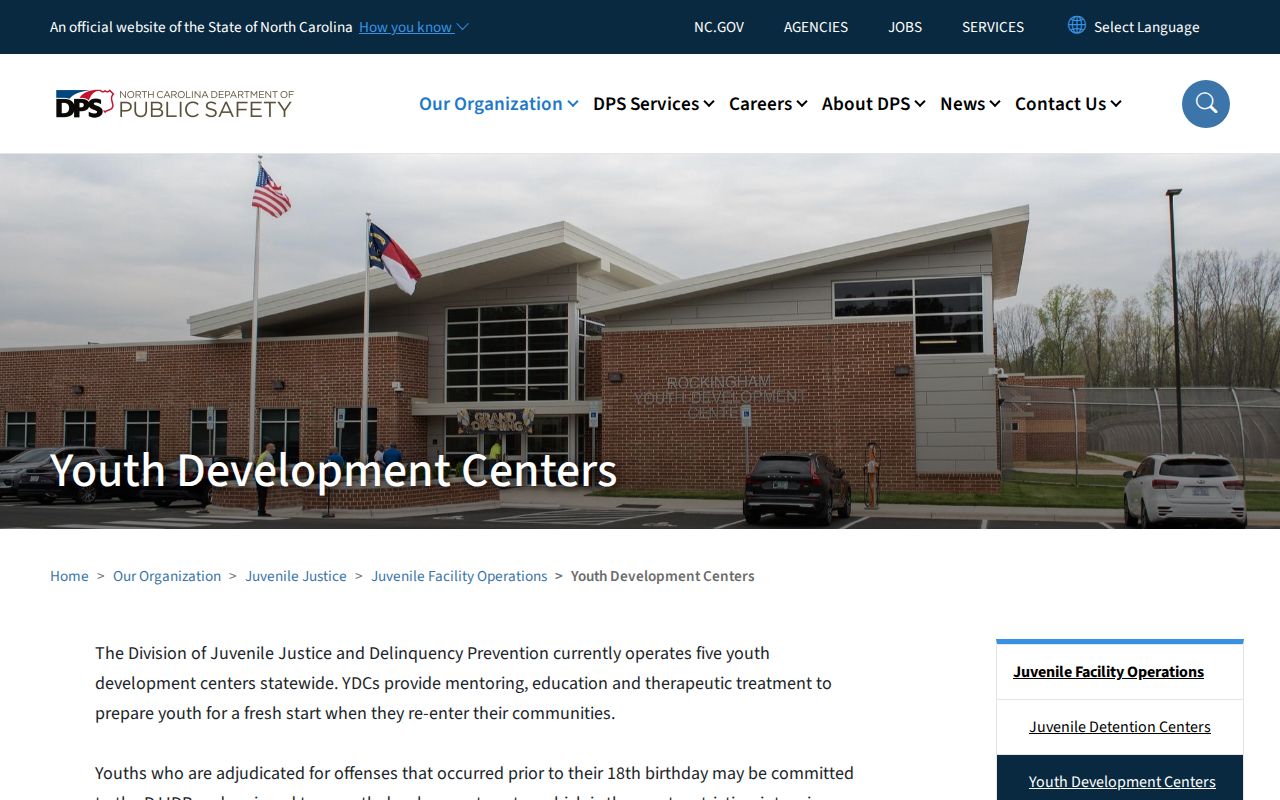
The directory supports agency routing, while confidential case and discharge details remain within authorized court and Juvenile Justice channels.
Cabarrus Youth Center Facility Facts
The state identifies Cabarrus Youth Development Center as a juvenile commitment facility for males and says it was North Carolina’s first youth development center. It has 96 beds. Those facts describe the institution. They do not disclose who is present, how many beds are occupied, or whether any specific youth was released.
The center differs from temporary juvenile detention. A youth development center serves a longer-term commitment role after juvenile court action. The Cabarrus Regional Juvenile Detention Center is a temporary secure setting while a youth awaits court or another placement. Moving between the two is not an adult release and should not be described as one.
Note: Bed capacity is a facility design figure and does not reveal current population, identity, or discharge activity.
Cabarrus Youth Discharge Records
North Carolina juvenile records are confidential under G.S. 7B-3001 and related rules. That protection covers more than a name on a list. It affects court, custody, placement, service, and discharge information. Cabarrus Youth Development Center therefore has no public adult-style discharge roster, booking page, photograph gallery, or offender-detail screen described in the research.
General public-record law does not override a specific confidentiality rule. A person seeking access must rely on the legal role, court order, consent rule, or agency process that applies to the youth. The agency can require identity checks and can limit what it provides. A denied public request should not be redirected to the Sheriff or an adult state-prison office as a workaround.
- Commitment
- A juvenile court disposition involving placement in a youth development center.
- Discharge
- The official end of the applicable commitment or placement as shown by authorized records.
- Step-down
- A planned transition to a less restrictive setting under court and agency direction.
- Confidential record
- Information whose access is limited by juvenile law and the recipient’s authorized role.
Note: Confidentiality remains in force even when a family member or community contact knows that a transition occurred.
Adult Searches Exclude Youth Discharge
Cabarrus P2C lists adults currently reported in the Cabarrus County Detention Center. It does not search Cabarrus Youth Development Center. A youth’s absence from P2C says nothing about commitment, placement, or discharge because the youth was never meant to appear in that adult county-jail system.
NCDAC Offender Search covers adult state prisoners and adult probation, parole, and post-release supervision records. Cabarrus Youth Development Center is state operated, but it is not an NCDAC adult prison. State operation alone does not make a juvenile commitment public through the adult offender database. NC SAVAN and county recent-release tools likewise must not be offered as youth locators.
The Cabarrus County adult custody search distinguishes county-jail release, state-prison discharge, and federal transfer for adults. Its public name-search path does not cross into confidential juvenile records. Stop the adult search when the facts point to this youth facility and use only an authorized case route.
Cabarrus Court Discharge Routing
Discharge and step-down decisions are tied to juvenile court and Juvenile Justice planning. The Cabarrus County court hub identifies the official local court system, and the Cabarrus court contact directory provides public routing information. Neither page creates a public youth case search or opens a confidential file.
An authorized participant should begin with the case number, attorney, court notice, and assigned agency contact. Ask which document controls the present placement and what instructions apply. A court order can establish legal authority, while the agency plan addresses the practical transition. Both must be read within the access limits of the juvenile case.
Do not repurpose adult eCourts search tactics to discover a youth’s status. No public result may reflect confidentiality rather than absence. Court staff also cannot use a public call to disclose protected case or placement details. The authorized participant should follow the secure process the office provides.
Note: Official routing pages provide contacts, not public permission to inspect a youth’s court or discharge record.
Cabarrus Youth Release Planning Limits
Research does not publish a general discharge time, exit location, family waiting area, transportation practice, weekend procedure, property rule, or public pickup process for Cabarrus Youth Development Center. None should be inferred from adult jail procedures or state-prison release policy. The center’s ban on general public access makes advance authorization especially important.
Use the written case plan for who may receive the youth, where the next placement is, and which services or court duties continue. A step-down may involve ongoing Juvenile Justice oversight even though the youth is no longer in the same secure setting. A transfer may preserve secure custody at another location. “Released” without naming the facility or authority that ended is too vague.
The public phone number can support official routing, but staff may disclose only information allowed by law and the caller’s role. Do not expect an unverified caller to receive a youth’s location or timetable. If a planned transition changes, rely on the assigned agency contact and the latest court instruction rather than travel based on an earlier estimate.
No published schedule establishes when a Cabarrus discharge posts or how quickly an allowed record reaches an authorized recipient. Preserve each dated court or agency notice and ask the assigned contact which one currently controls.